Lesson intent. You will produce a single artifact—the Media Production System Map v1—that names your real production (show, brand, channel, or client property), the outcomes it must hit, the tool stack that moves assets and metadata, the narrative of how ideas become published media, the top risks if storage or publish breaks, and one executable next step. Everything here supports completing the workbook blocks without external research, using your current pipeline or a declared pilot.
Opening: why a system map before more gear
Most “content problems” are pipeline problems: files live in five places, exports disagree, and nobody can draw the path from mic to viewer. Media Production treats your property as an automation-aware system: capture, editorial, asset management, distribution, and feedback loops. The map you build is the contract for later lessons—what to harden, measure, and automate with intent.
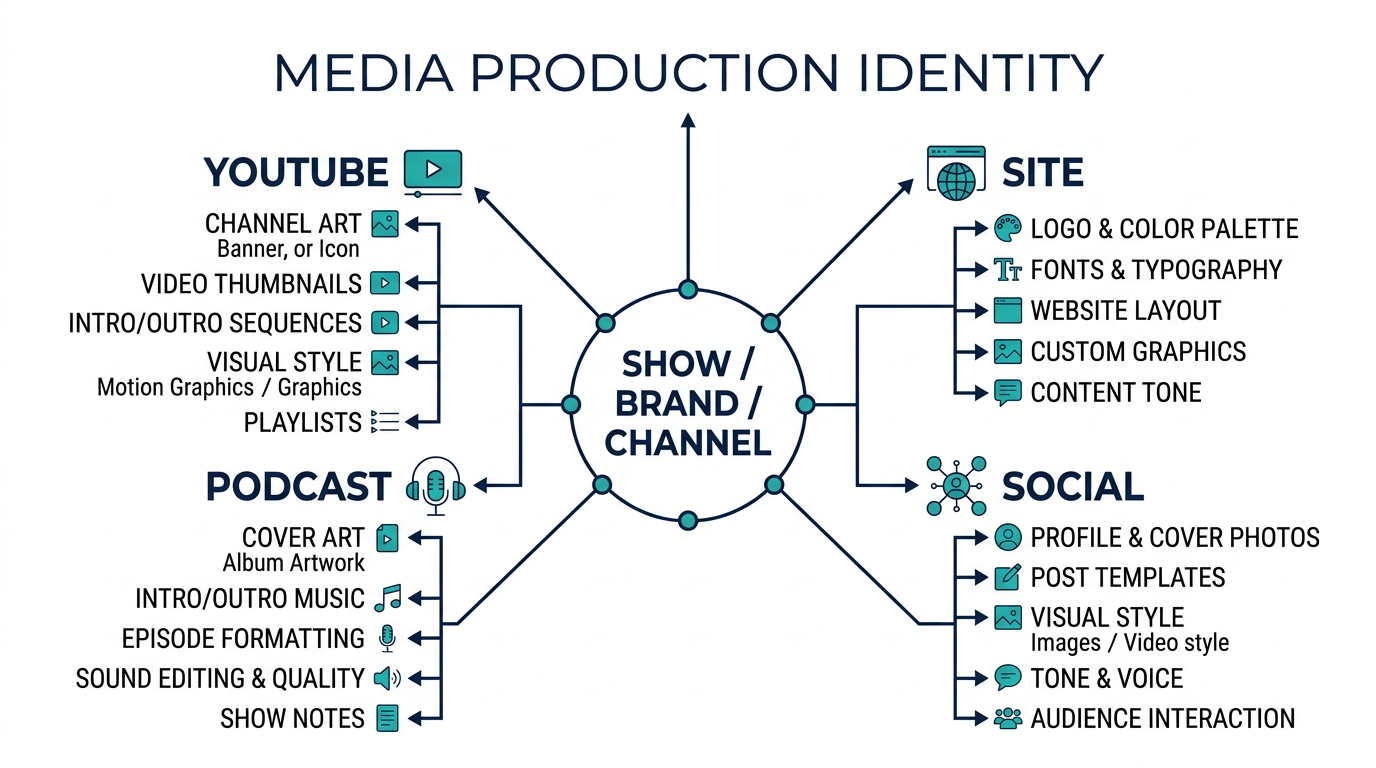
Workbook checkpoint (Block MP101). Open the workbook below and complete Production identity & audience. Name the working title, primary outlets, and who this production serves—no fantasy channels; use what you operate or are about to launch.
The Media Production System Map (artifact overview)
Your deliverable has six spine sections, each with one focused field:
- Production identity — who the show is for and what it is called in production.
- Outcomes & constraints — measurable outcomes and non-negotiable limits (budget, legal, brand, turnaround).
- Stack & integrations — capture through delivery: NLE, DAM, transcoding, hosting, APIs.
- Flow narrative — how an idea becomes a published asset and where humans hand off to automation.
- Risk & blast radius — three ranked ways the system can hurt you if it breaks.
- Next commitment — one step, one owner role, one window to prove a path end-to-end.
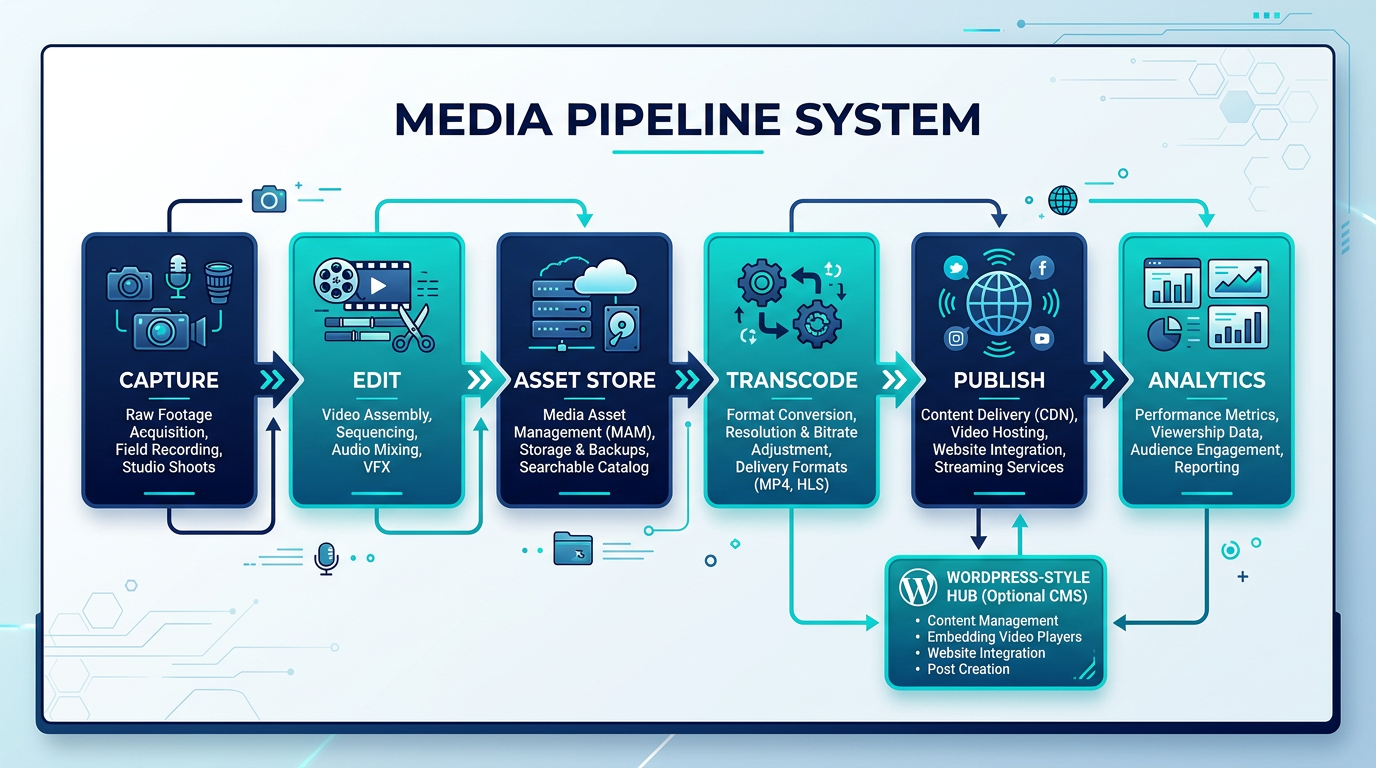
Workbook checkpoint (Block MP102). Complete Outcomes & constraints. Outcomes must be observable (episodes per month, turnaround SLA, growth targets). Constraints must be explicit (music budget, codec policy, platform rules).
System explanation: surfaces, logic, exits
Every serious media op has three layers you can inspect without opening a timeline:
- Surfaces — cameras, mics, sets, ingest stations, upload endpoints. This is where signal enters.
- Logic — edit decisions, proxies, naming, tagging, approvals, render presets. This is where intent becomes files.
- Exits — masters, mezzanines, CDN, social APIs, email/push, analytics pixels. This is where assets reach audiences and telemetry.
When your map is honest, you stop “fixing the thumbnail” while the wrong file ships to the wrong channel.
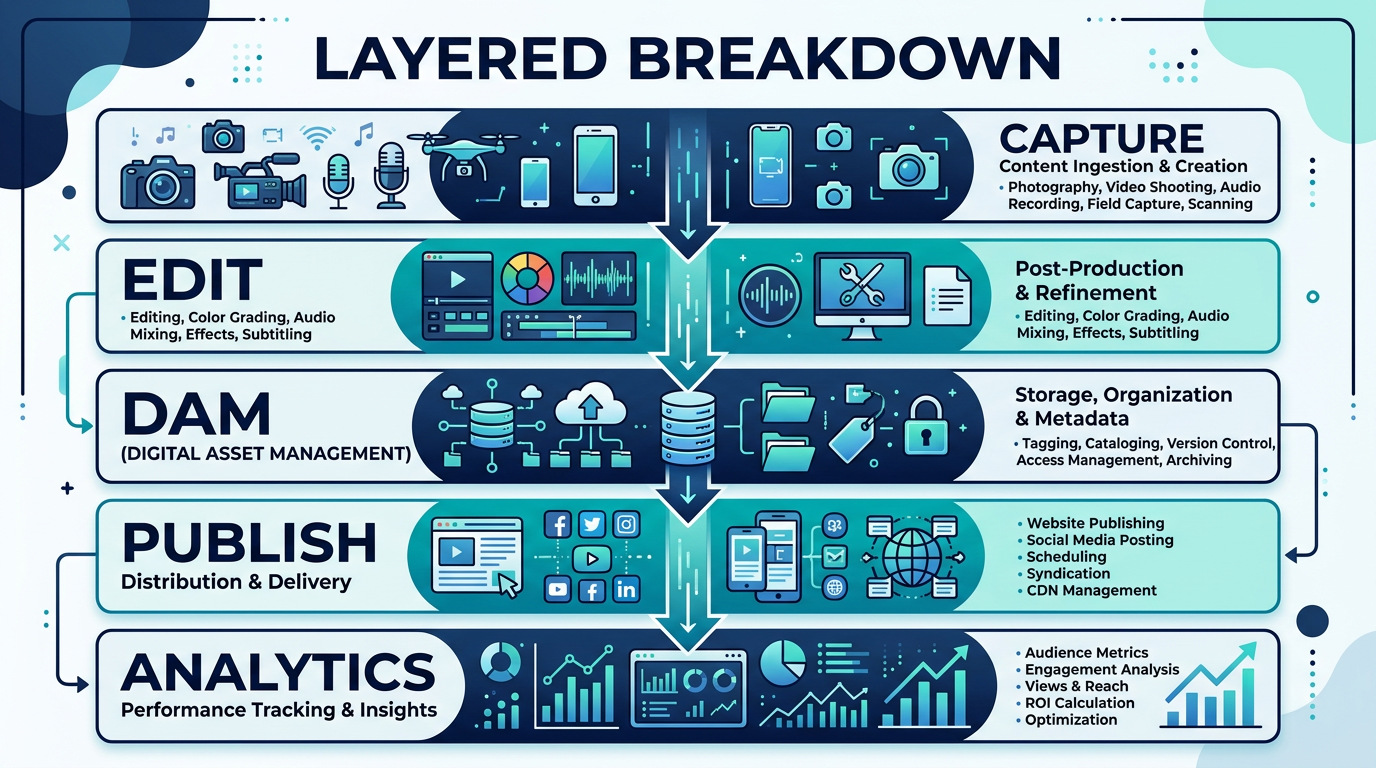
Workbook checkpoint (Block MP103). Complete Stack & integrations. Name products and roles—never passwords or secret URLs in this field.
Real-world pattern (illustrative)
Below is a pattern, not your stack: record → sync → edit → export → upload. Substitute your tools in the workbook—do not copy this verbatim into production docs.
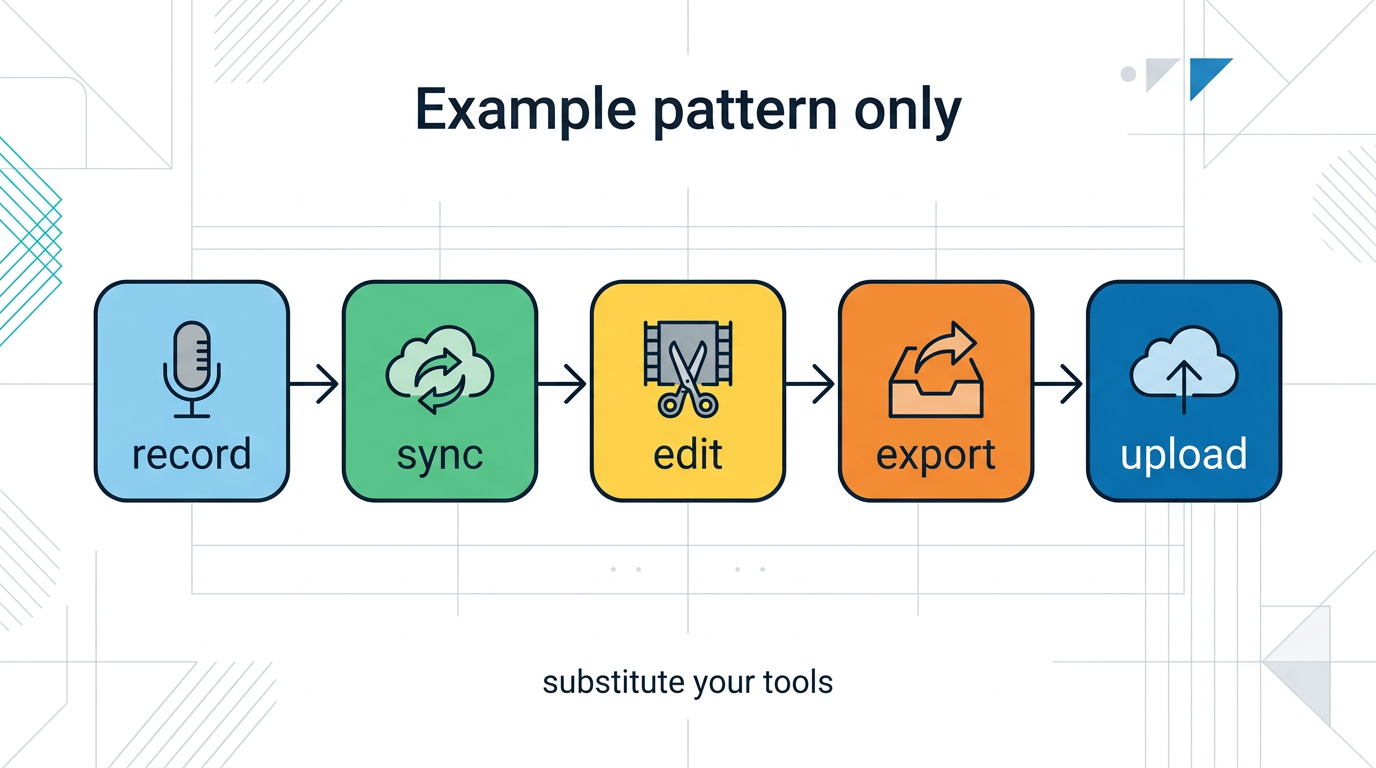
Workbook checkpoint (Block MP104). Write the Flow narrative as ordered steps: capture locations, sync rules, edit lockups, export formats, publish targets, and where logging is weak—that is tomorrow’s incident.
Failure modes and blast radius
Media failures are expensive when they are silent: wrong asset published, RAID without a tested restore, music clearance assumed. For each risk, ask who loses money, trust, or legal standing first.
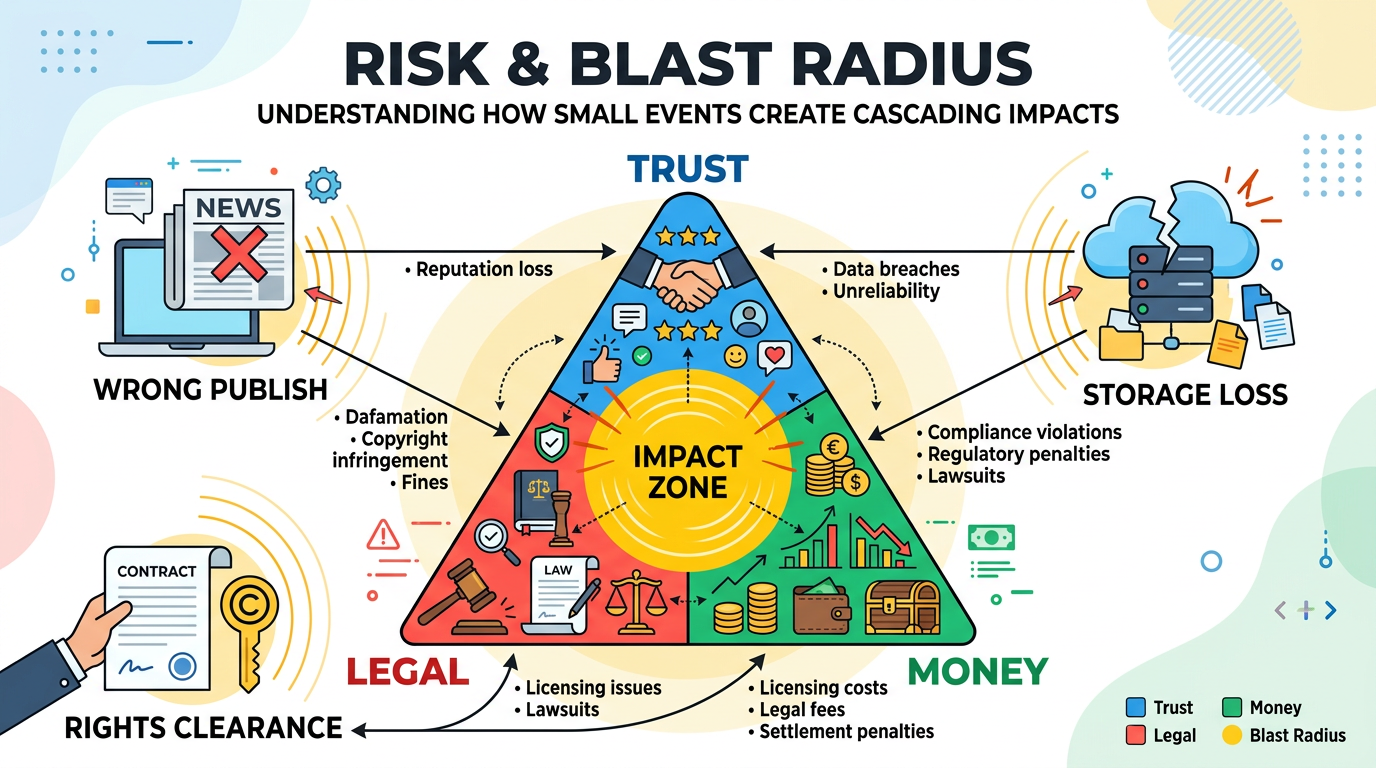
Workbook checkpoint (Block MP105). Capture three ranked risks with blast radius in plain language—no vendor FUD; this is operational truth for your production.
Execution: one commitment beats ten ideas
The map is not “done” when the fields are full—it is done when you choose a single next verification: prove one asset path end-to-end on a fixed schedule. Everything else is backlog.
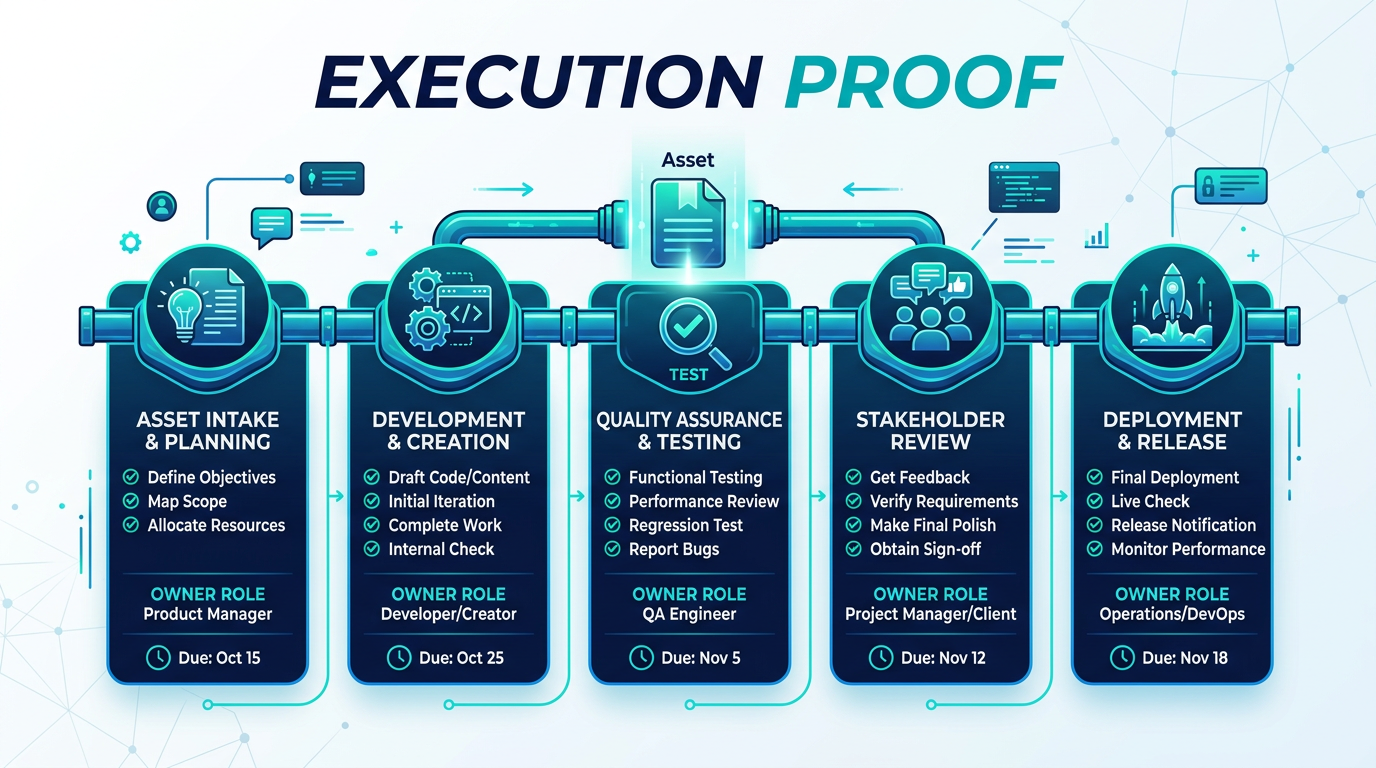
Workbook checkpoint (Block MP106). Record Next commitment with owner role and time window.
Deeper context: automation seams
Automation in media is not magic—it is seams: watch folders, render queues, metadata triggers, CMS hooks, and social schedulers. Your map should name where a human must approve versus where a machine may proceed. If two systems both “own” the master, you have a future outage.
Anti-patterns that invalidate a map
- Tool soup without owners. Listing twelve apps with no statement of which owns masters, captions, and publish state.
- Happy-path only. Flows that omit failed uploads, partial renders, copyright flags, and “editor went home.”
- Anonymous cloud. Writing “we use the cloud” without naming buckets, regions, and lifecycle rules.
- Outcome theater. Outcomes you cannot measure with tools you already pay for.
Staging vs production honesty
If you map a pilot on a test channel, label it as such in MP101 and carry the caveat through MP104. The worst failure is a beautiful map of a pipeline that does not match production codecs, storage, or publish permissions.
Final workbook line
Scroll to the Workbook section below, complete all six blocks, then take the knowledge check. Passing demonstrates you can defend your pipeline decisions under light pressure.
Workbook
Media lesson 001 — your entries save automatically while you are logged in.