Lesson intent. You will produce the Media Automation Flow Blueprint v1—how triggers become jobs, how ownership and approvals work, how retries stay safe, and how you observe success. It consumes the toolchain boundaries from Lesson 002 and feeds distribution controls in Lesson 004.
Opening: automation is choreography, not vibes
Automation fails when jobs are anonymous: duplicate renders, silent webhook retries, or approvals that exist only in chat. This blueprint makes events, job objects, and idempotency explicit so pipelines can be tested and audited.
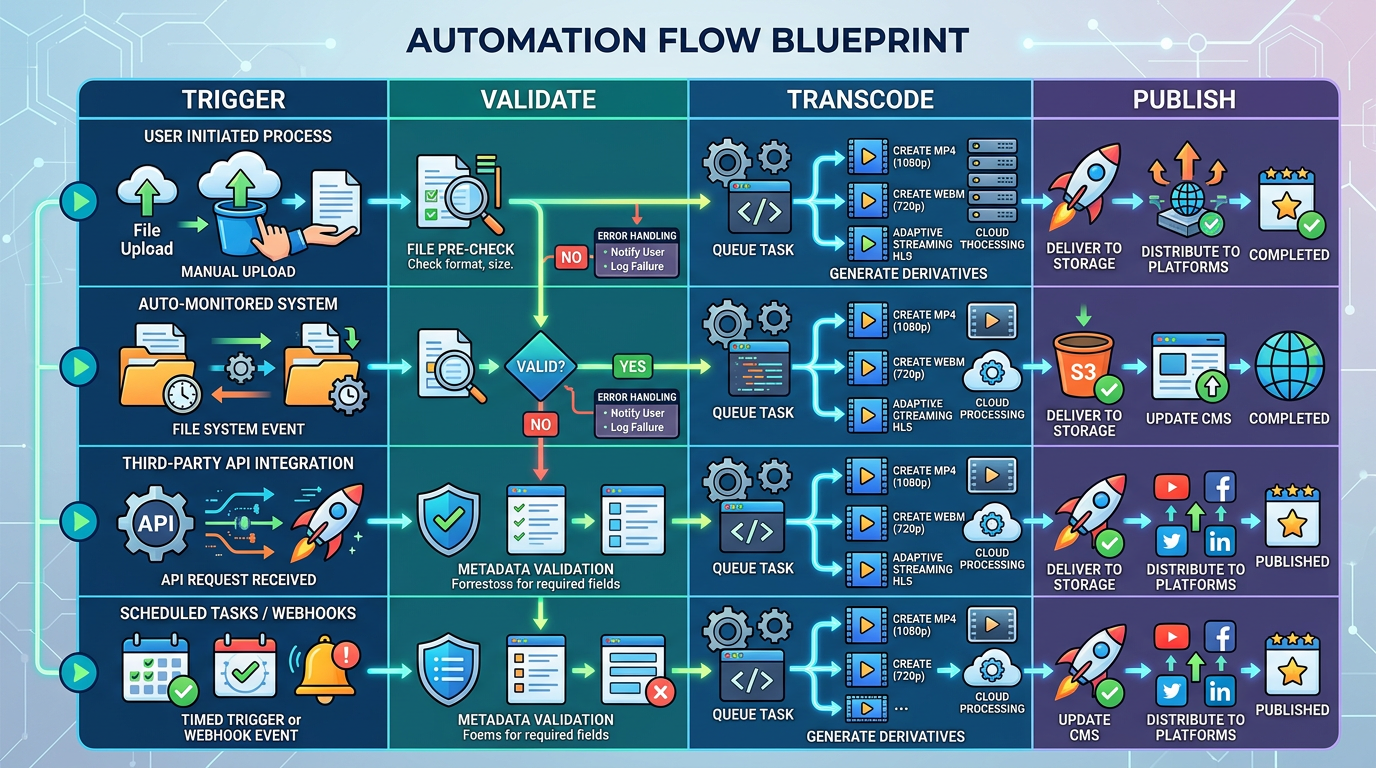
Workbook checkpoint (Block MP301). Complete Automation trigger catalog. List events that start or mutate media jobs (file landed, CMS publish, manual rerun).
The Media Automation Flow Blueprint (artifact overview)
Your deliverable has six spine sections:
- Automation trigger catalog — what kicks work off.
- Job objects & ownership — the records that move (episode, render job, asset ID).
- Branching & approval rules — human gates vs machine proceed.
- Retries & idempotency — safe replays and dedupe rules.
- Observability for media jobs — logs/metrics that prove completion.
- Automation flow commitment — one end-to-end proof of the blueprint.
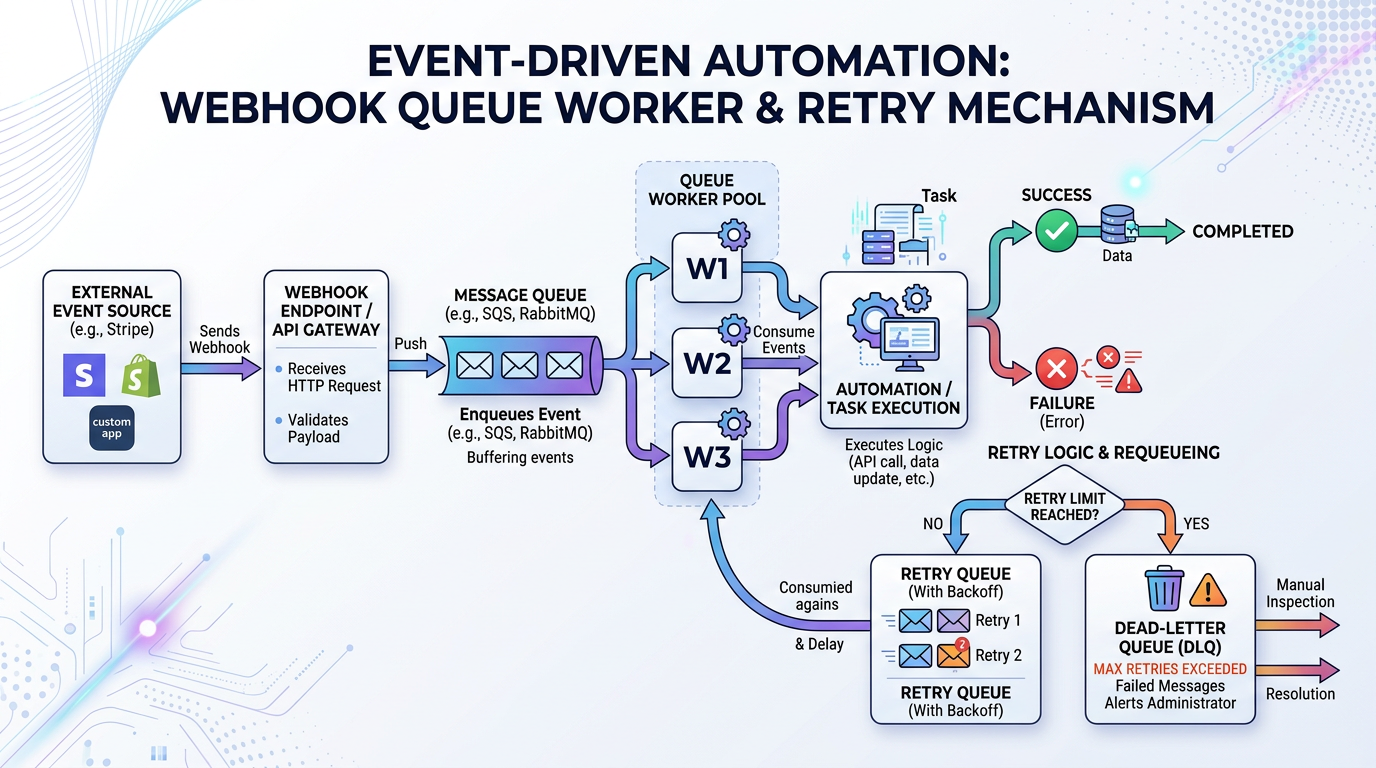
Workbook checkpoint (Block MP302). Complete Job objects & ownership. Define the identifiers and systems of record for a job as it moves.
System explanation: triggers, state, exits
Three controls keep automation honest:
- Triggers — webhooks, schedules, watch folders, API posts.
- State — pending, rendering, awaiting approval, published, failed.
- Exits — handoff to distribution, archive, or human escalation.
When state is shared vocabulary, on-call can read dashboards instead of DMs.
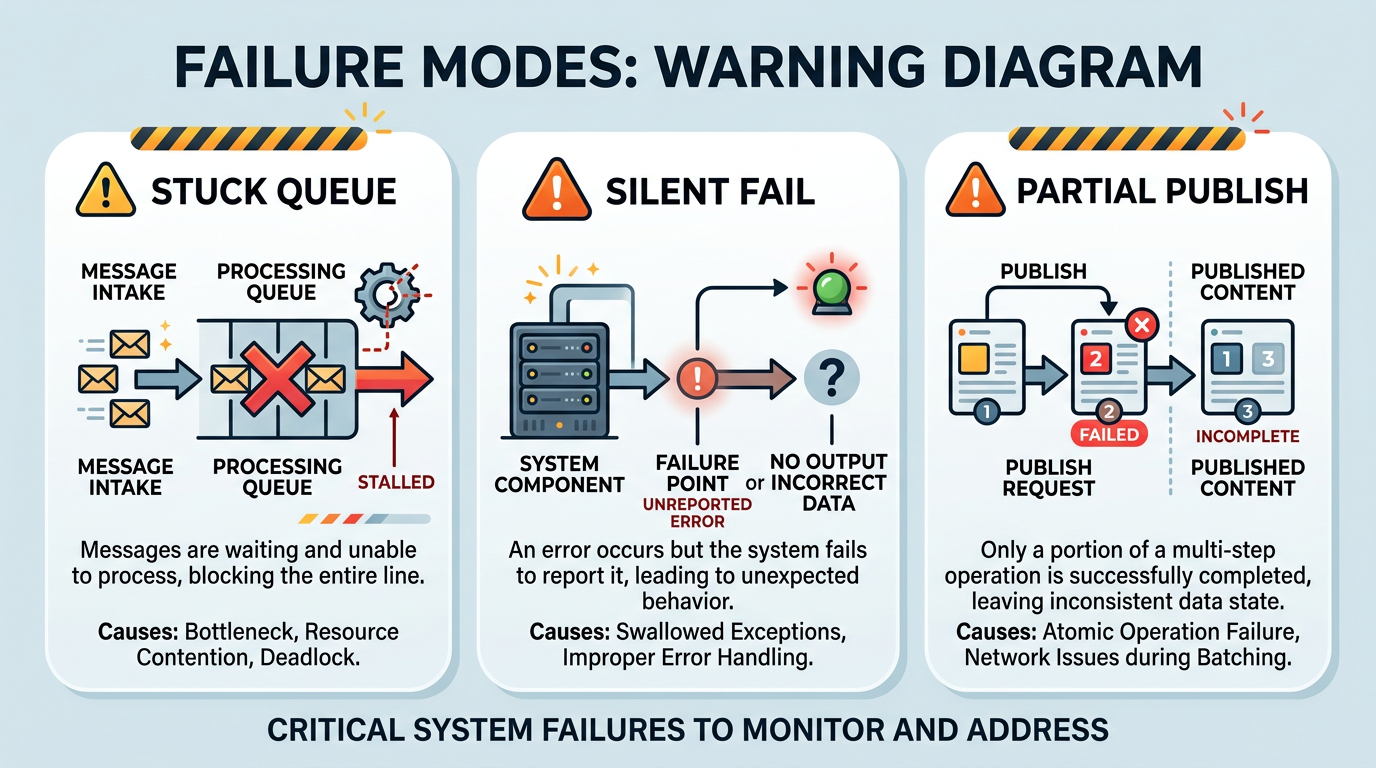
Workbook checkpoint (Block MP303). Complete Branching & approval rules. State where humans must approve versus where automation may proceed.
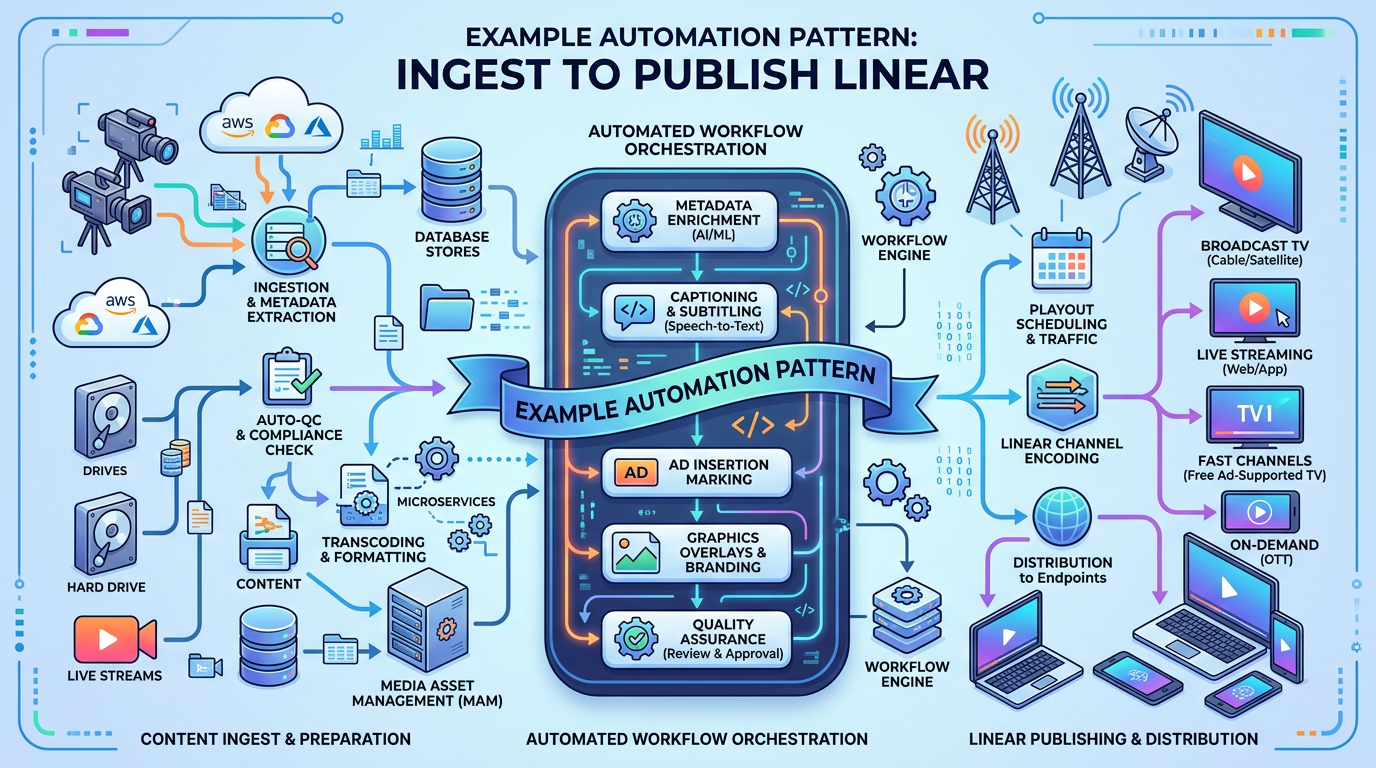
Real-world pattern (illustrative)
Pattern only: trigger → validate → transcode → QC stub → publish task. Replace with your systems in MP304; do not paste into runbooks verbatim.
Workbook checkpoint (Block MP304). Complete Retries & idempotency. Describe duplicate renders, webhook retries, and how you prevent double publish.
Maturity and observability
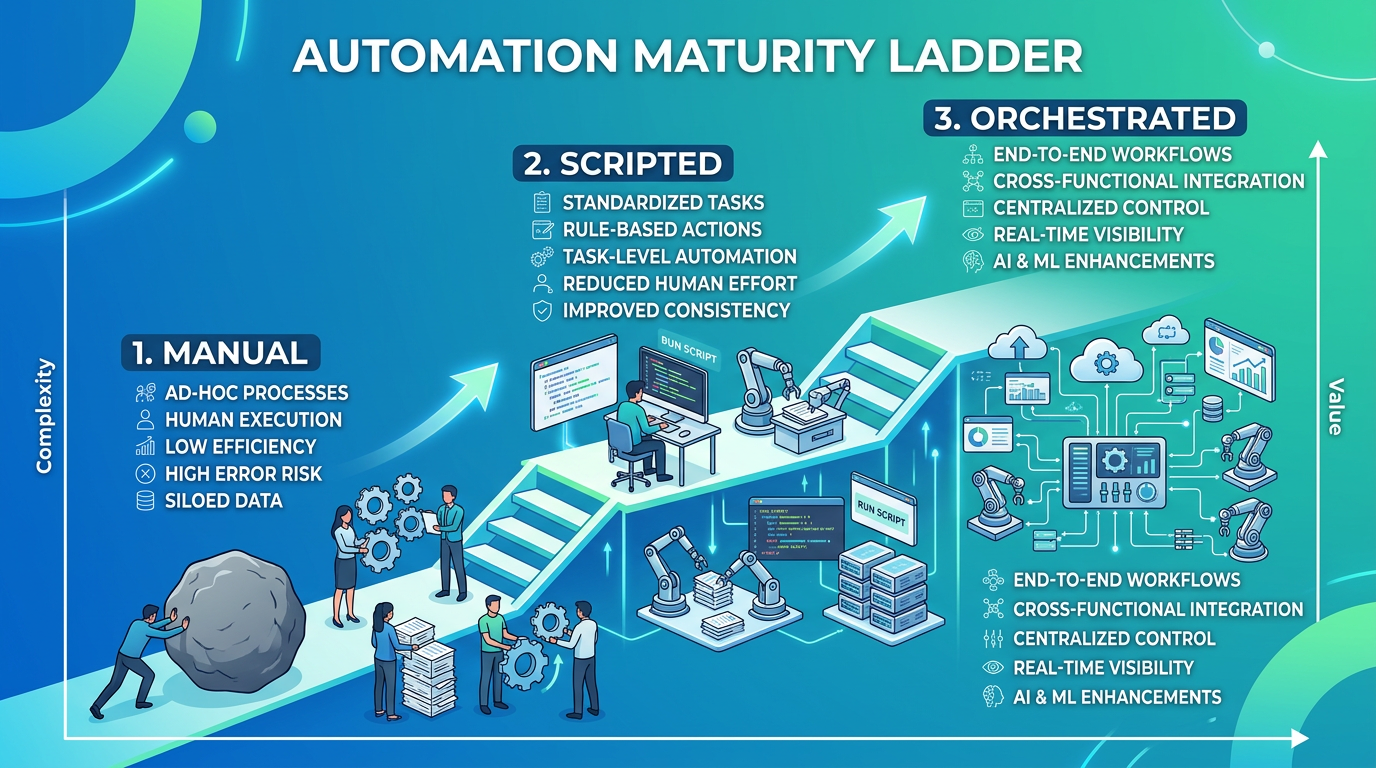
Move from manual reruns → scripted retries → orchestrated jobs with provable completion signals. If you cannot point to a log line or metric for “done,” you do not have automation—you have hope.
Workbook checkpoint (Block MP305). Complete Observability for media jobs. Name logs/metrics/alerts that prove jobs finished or failed visibly.
Execution: prove the blueprint
Pick one flow that touches trigger → worker → publish handoff with a named owner and rollback path.
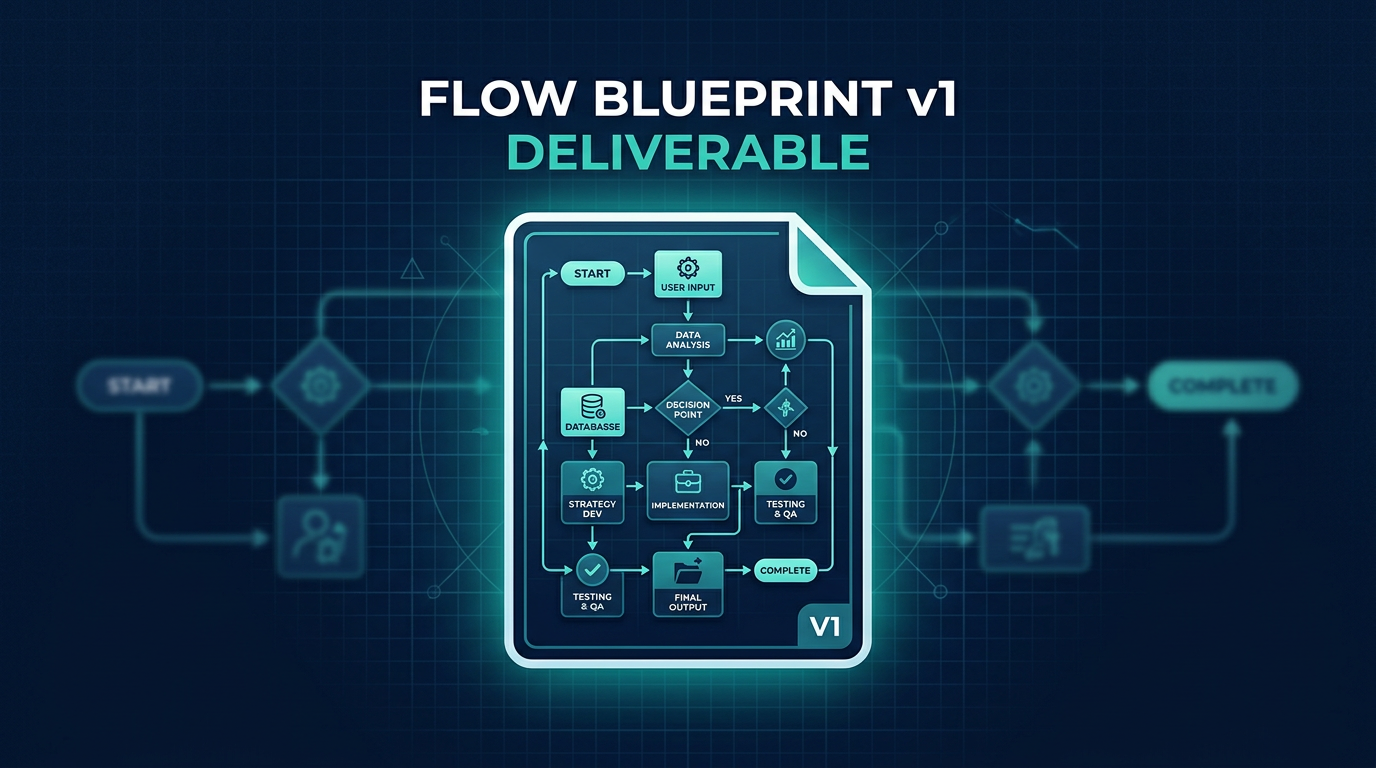
Workbook checkpoint (Block MP306). Record Automation flow commitment with scope, owner, and completion date.
Deeper context: safe concurrency
Media jobs are parallel and bursty. Idempotency keys, dedupe on asset IDs, and poison-queue handling are not optional—without them, concurrency becomes corruption.
Anti-patterns that invalidate a flow blueprint
- ChatOps as state machine. Approvals that only exist in Slack threads.
- Infinite retries. Hammering APIs without backoff or caps.
- Shadow publishes. Jobs that skip the same gates as interactive publishes.
- Metric theater. Dashboards without alerts tied to customer-visible failure.
Pilot vs production honesty
If triggers differ between pilot and prod, document both in MP301 and mark which observability signals are trustworthy for go-live.
Final workbook line
Complete the workbook blocks, then pass the knowledge check to show you can defend triggers, ownership, and retries.
Workbook
Media lesson 003 — your entries save automatically while you are logged in.