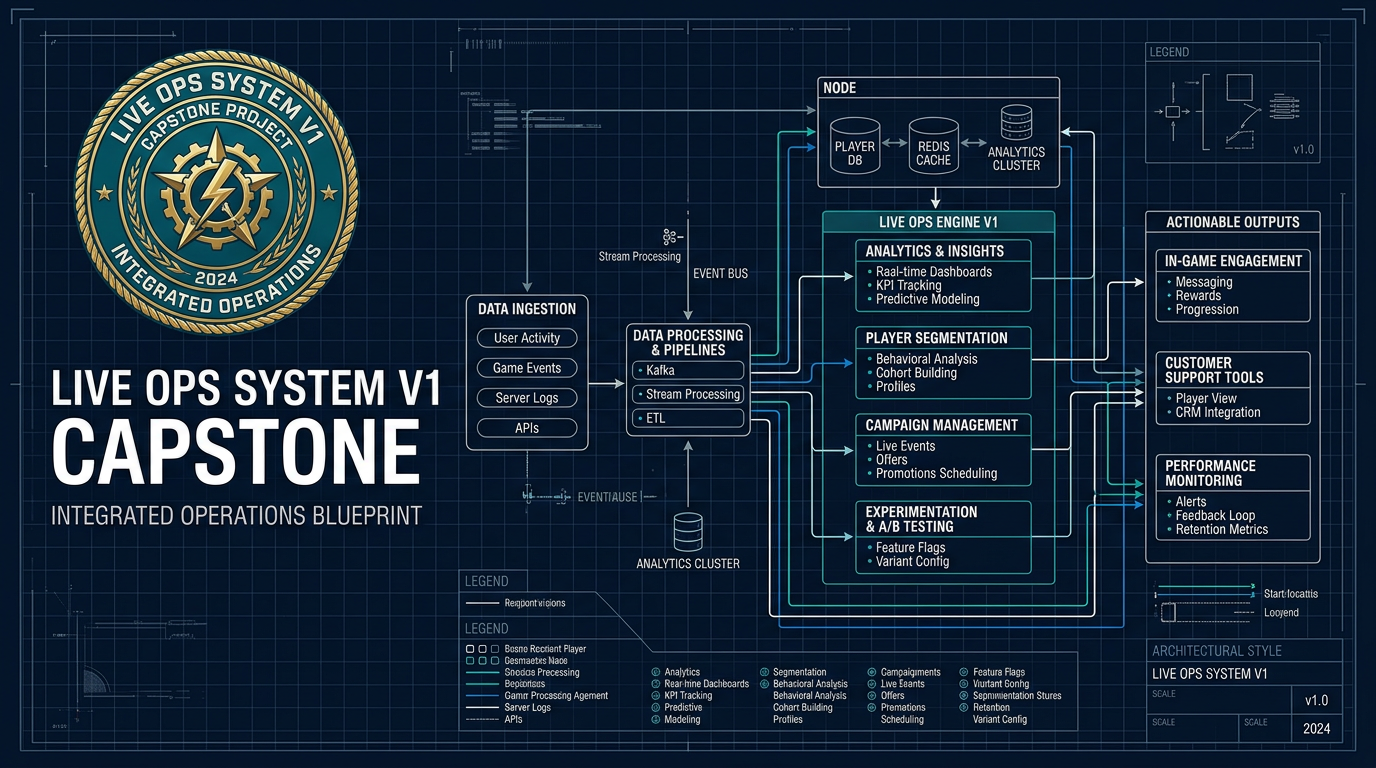
Lesson intent (capstone). You will produce the Live Media Operations System v1—scope, health signals, backup/restore proof, change control, incident paths, and a live operations commitment. This integrates the toolchain (002), automation (003), and distribution map (004) into something you can run when viewers and revenue are on the line.
Opening: live is a different sport than build
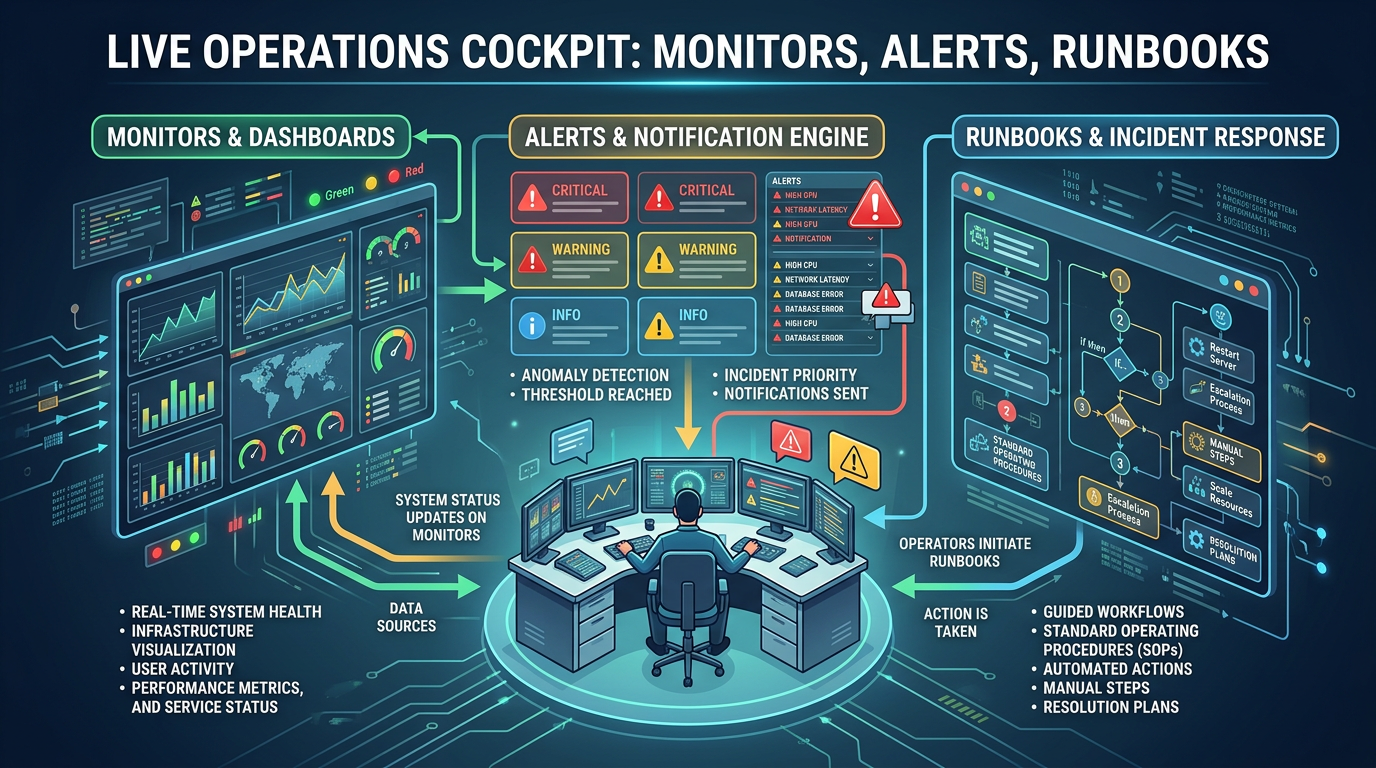
Live operations reward boring clarity: canonical URLs, SLOs you measure, restores you rehearse, and changes that cannot happen without a named approver. This lesson is where architecture meets pager duty.
Workbook checkpoint (Block MP501). Complete Live scope & canonical URLs. State what is in production scope and the authoritative URLs/properties for your live surfaces.
The Live Media Operations System (artifact overview)
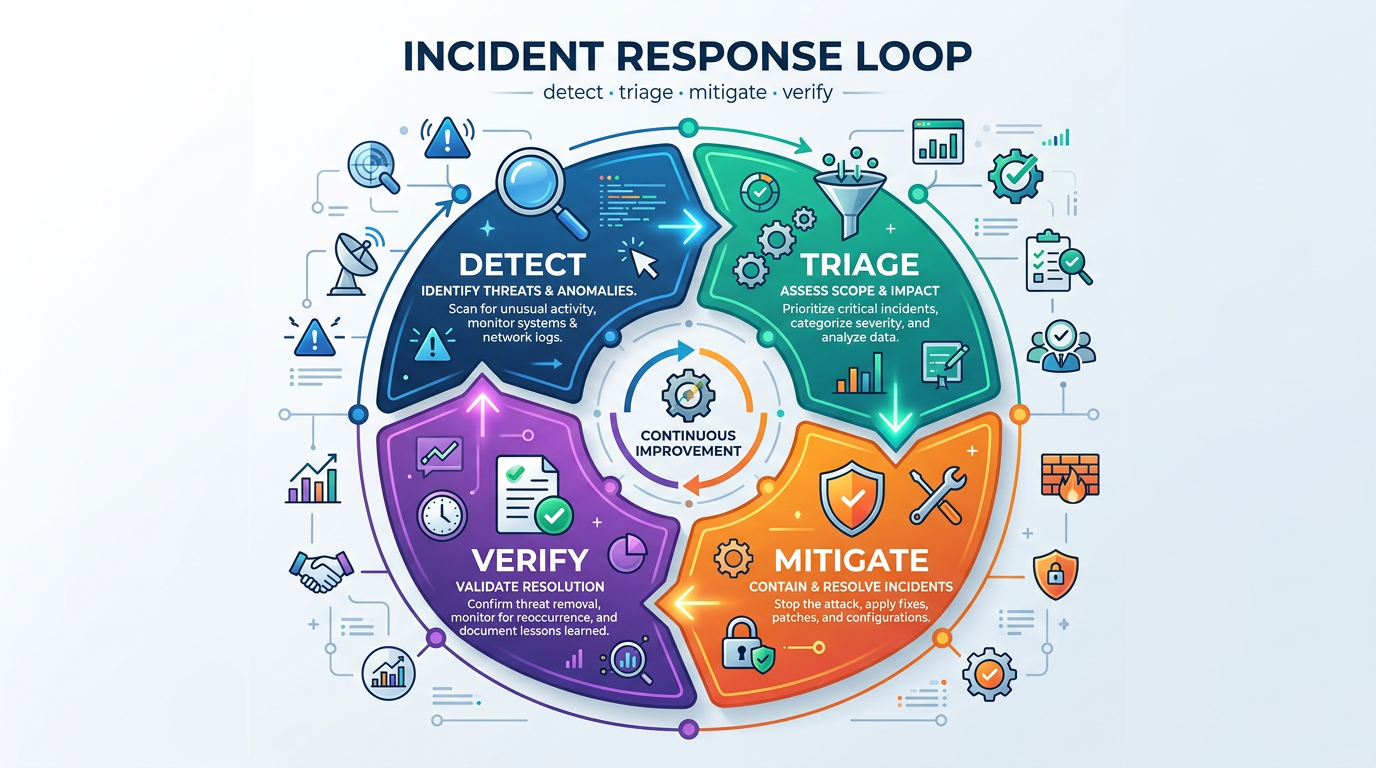
Your deliverable has six spine sections:
- Live scope & canonical URLs — what is truly production.
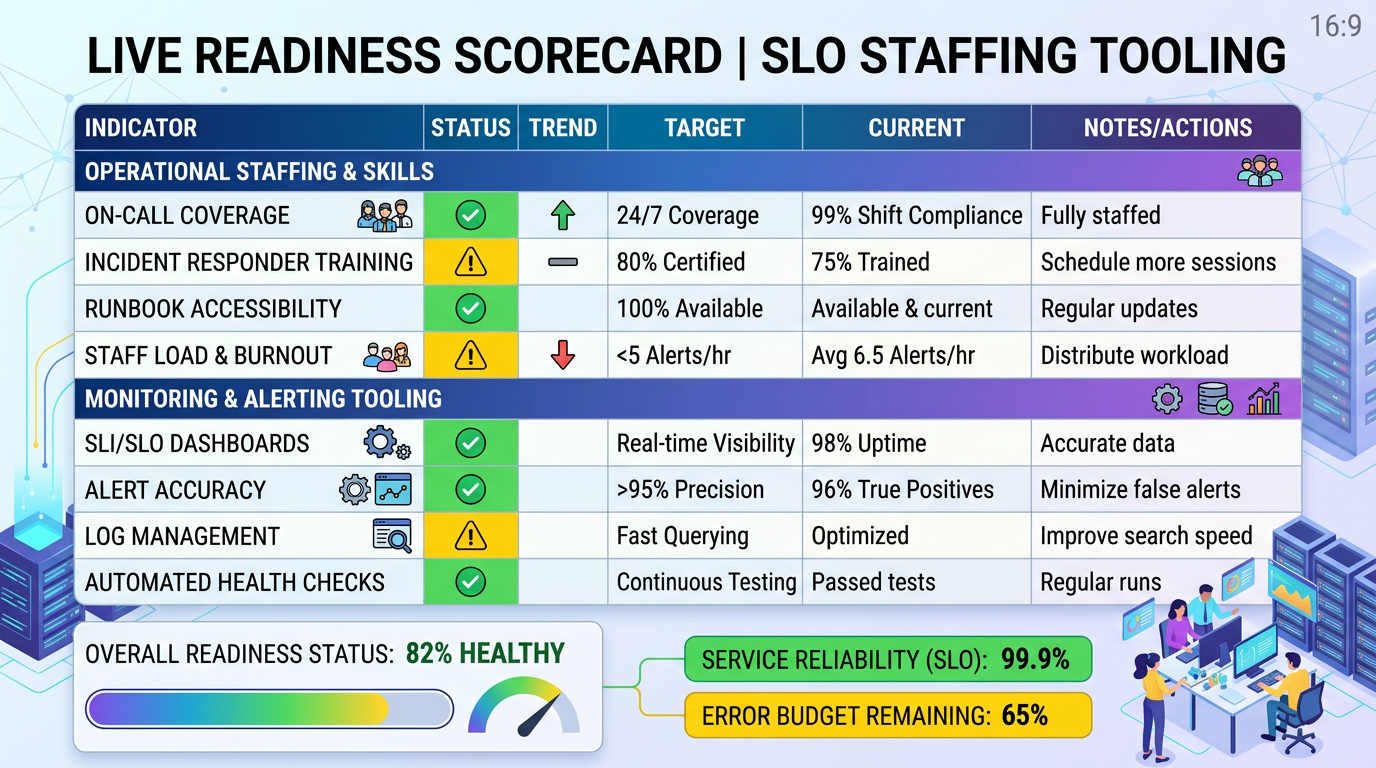
- Health & SLA signals — what “healthy” means for viewers and revenue.
- Backup & restore drill — provable recovery for masters and projects.
- Change control on live — who may change presets, keys, or publish paths.
- Incident & escalation — outages, rights, and bad publishes.
- Live operations commitment — capstone proof for the whole Media package.
Workbook checkpoint (Block MP502). Complete Health & SLA signals. List signals and thresholds tied to user-visible failure—not vanity metrics.
System explanation: scope, resilience, change
Three loops keep live ops from becoming chaos:
- Scope discipline — if it is not canonical, it is not “live.”
- Resilience proof — backups tested on a schedule you can defend.
- Change discipline — approvals for anything that touches publish or revenue.
When change control is explicit, Friday deploys stop being roulette.
Workbook checkpoint (Block MP503). Complete Backup & restore drill. Describe a rehearsed restore that proves masters/projects return within your stated window.
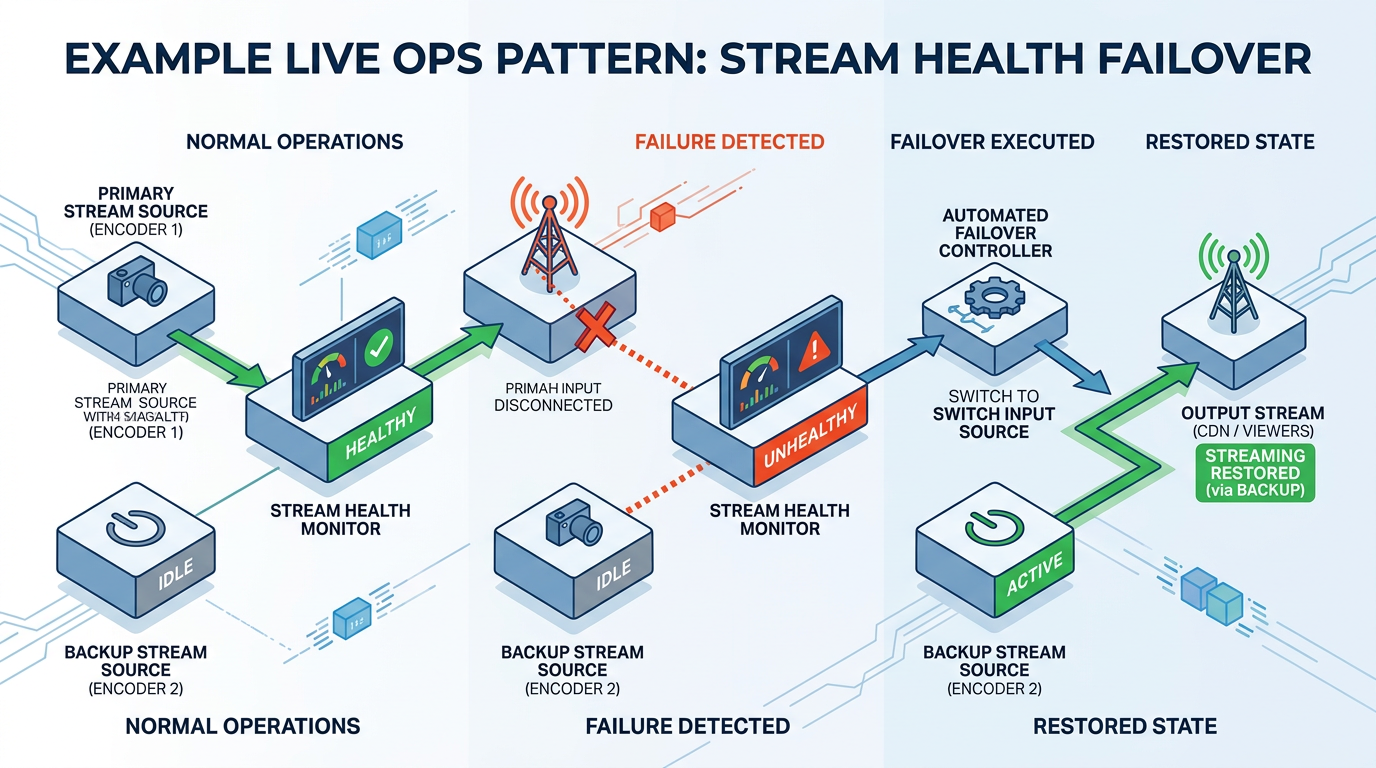
Real-world pattern (illustrative)
Pattern only: health dashboard → anomaly → rollback task → comms template → post-incident review. Map your real roles in MP504–MP505.
Workbook checkpoint (Block MP504). Complete Change control on live. Name who may alter presets, credentials surfaces, or publish paths—and how requests are reviewed.
Incidents, rights, and escalation
Separate platform outage from content incident (wrong asset, rights strike). Each needs owners, comms channels, and rollback levers you practiced in Lesson 004.
Workbook checkpoint (Block MP505). Complete Incident & escalation. Outline detection paths, on-call roles, and customer/stakeholder comms for major classes of incidents.
Execution: capstone proof
Pick one live ops proof: fire-drill incident, audited change window, or canary publish with measured rollback—scheduled with an owner.
Workbook checkpoint (Block MP506). Record Live operations commitment—the package-level proof with owner and date. Completing this workbook after passing prior lesson quizzes positions you for package certification when all Media lessons are complete.
Deeper context: tying the package together
Toolchain boundaries (002), automation truth (003), and distribution gates (004) all surface here. If earlier lessons were honest, this section is execution; if not, this is where fiction breaks.
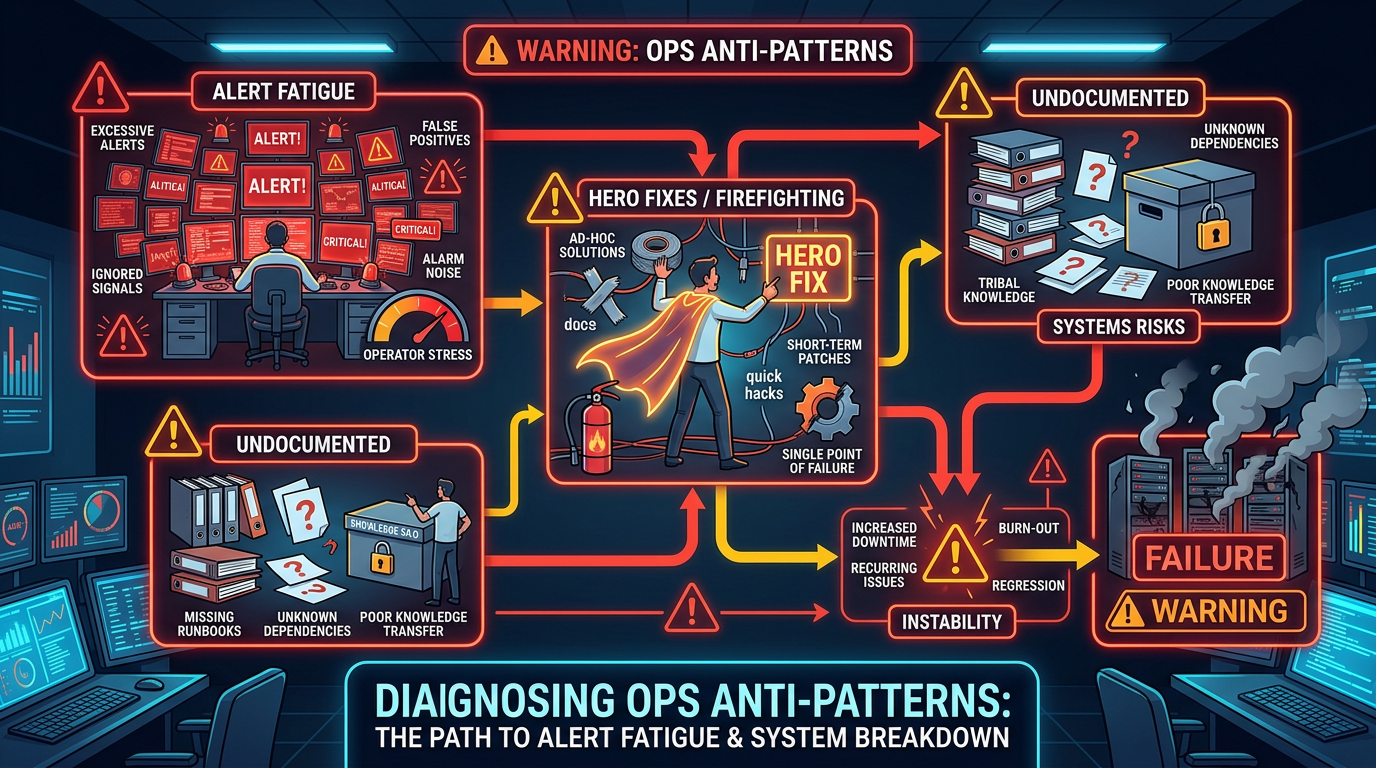
Anti-patterns that invalidate live readiness
- Monitoring without ownership. Alerts no one acknowledges.
- Untested restore. Backups that have never been rehearsed end-to-end.
- Shadow changes. Tweaks outside change control during peak hours.
- Blurred scope. “Production” meaning different things to edit, ops, and revenue.
Certification note
When Lessons 001–005 are complete and this quiz is passed, the Media package certificate can issue (see on-screen confirmation). Use My Certifications to view or verify.
Final workbook line
Complete the workbook, pass the knowledge check, then use course navigation when enabled. Thank you for running the pipeline like a system—not a pile of tools.
Workbook
Media lesson 005 — your entries save automatically while you are logged in.